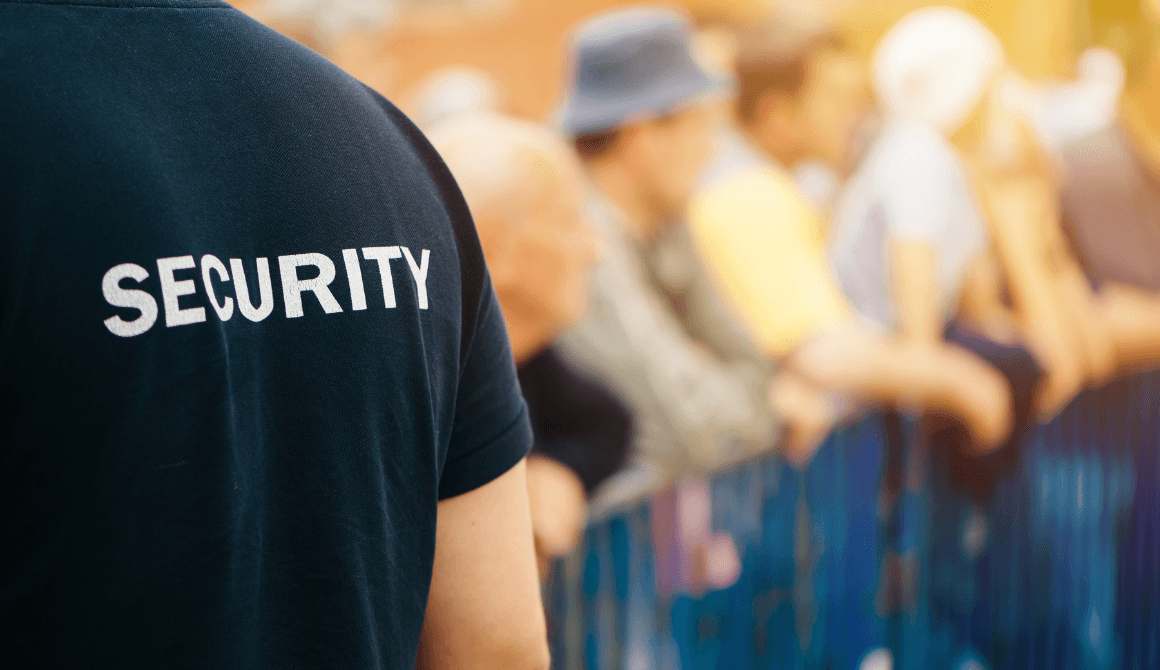
Every event organizer knows it: safety is essential. Because if you do not have the safety of your event in order and something happens, then that beautiful location and impressive guest list are suddenly not so important at all. This handy checklist helps you draw up a safety plan so that you can organize a safe and relaxed event.
Why a safety plan is crucial
You probably prefer not to think about it, but a lot can go wrong at an event. Think of calamities such as fire or visitors becoming unwell. But smaller things can also happen, such as a traffic jam at the parking lots or the entrance. To be prepared for all possible scenarios, it is wise to draw up a safety plan. In that plan, you map out all the risks. You also explain how you as the organizer will respond to them. Is everyone within your organization aware of this plan and their task? Then the chance that really unpleasant things happen is much smaller.
Checklist for the safety of your event
A lot is involved in drawing up a safety plan. This checklist helps you to go through everything point by point.
1. What kind of event is it?
In your safety plan, you first map out the most essential information about the event. You answer questions such as: what is the nature of the event? Who is organizing it and who are the contact persons? When does the event take place and at what location? How is the program structured? How many people are expected, what are the peak times, and what kind of audience is it? Always include a floor plan of the event location in the appendix.
2. Is there a medical and health plan?
In the medical and health plan, you describe how many first-aiders and other emergency workers you deploy and where the first-aid post is located. Is that post easily accessible for ambulances? In connection with hygiene, you check how the sanitary and drinking water facilities are arranged and what needs to be done with waste.
A post shared by Nickelas (@112nickelas) on May 27, 2019 at 9:55 AM (PDT)
3. Is there a security plan?
Does your event need security? Then describe in the security plan who will be deployed for this and in what way. How many security guards are walking around at the event? The security plan also includes measures for crowd management. Is there clear signage of the routes on the grounds or in the venue? Can the crowd flow in and out in phases if necessary?
A post shared by D.I.S.S INT. SECURITY SERVICE (@diss_int_security_service) on May 26, 2019 at 11:19 AM (PDT)
4. Is there a fire safety plan?
Check if the event location is accessible for the fire department and where the emergency exits are. Are evacuation routes clearly indicated and what kind of fire extinguishing equipment is present? Are you decorating the stage or setting up booths? Then keep in mind that they must meet fire safety requirements. For example, they must not be made of flammable material.
A post shared by NedCert (@nedcert) on May 27, 2019 at 11:42 AM (PDT)
5. Is there a traffic plan?
In the traffic plan, you record what measures you deploy to regulate traffic. Via which roads does the audience arrive and what is the departure route? Is the route for emergency services free of obstacles? Where can visitors park? And do you deploy traffic controllers?
A post shared by CPA Events (@cpa_events) on May 25, 2019 at 11:22 AM (PDT)
6. Is there an evacuation plan?
Despite all measures, it can still happen that the event needs to be evacuated. For example, in the event of a fire. That is a stressful situation. Therefore, it is important to determine in advance who makes the final decision on an evacuation and who is in charge of it. Find out in advance how the evacuation could best take place and how much time it will take.
A post shared by Rudolf Steiner School Breda (@rudolfsteinerschoolbreda) on Mar 21, 2019 at 5:00 AM (PDT)
7. What are potential risks?
To be prepared for everything, it is smart to work out scenarios in which you describe what needs to be done in case of certain calamities. Think of situations such as sudden large crowds, fire, power failure, a bomb threat, or extreme weather. Determine who has which tasks at that moment. And consider when the emergency services should be called in and how they will be guided to the scene of the incident.
Very last checks
Gone through all the points on the checklist? Then finally, it is important that everyone is aware of their tasks and responsibilities. Do not forget to make clear agreements about communication before, during, and after the event. All done? Then you are ready for a fun and relaxed event, where the safety plan is hopefully not needed at all!
Organizing an event in Theater Amsterdam? The team at Theater Amsterdam will answer all your questions about the safety of your event. Want to know more now? Feel free to contact us.

Eva Otto
Director
About Theater Amsterdam
Theater Amsterdam is a unique venue on the waterfront. With a Theater Hall for 1,100 guests and a Blackbox of 1,200 m², it offers everything for events up to 2,000 guests. The projection screen and technology ensure impact at congresses and shows.
Every event a show
Planning your event at Theater Amsterdam?
Based on your programme, we can immediately help you create a logical event flow.